Discover Nikkei Logo

https://www.discovernikkei.org/en/interviews/clips/307/

Interviews

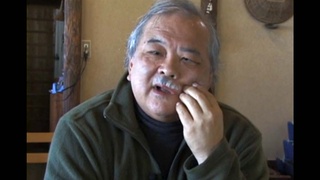
Yukio Takeshita

(b.1935) American born Japanese. Retired businessman.

Lack of notion of citizenship in Japan

Japanese people don’t understand about citizenship. Even if I say I’m a Japanese American, they’ll say, “Your parents are Japanese. You’re a Japanese.” Because the law is different, I think. So you look Japanese. Even if you say, “Yeah, I’m American,” most Japanese, typical Japanese, I think they don’t have the concept of what a Nisei is or a foreign American citizen. Because in Japan, there’s many Korean people—Nisei, Sansei—but they never, I think it’s not because of the law, but they don’t want to be Japanese Korean. Second generation, third generation, they say “Japanese-residing Korean.” So, in some sense, I think there is no concept of citizenship like American—born in the States, you are an American.


citizenship Finding Home (film) identity Japan

Date: Sep 11, 2003

Location: Tokyo, Japan

Interviewer: Art Nomura

Contributed by: Art Nomura, Finding Home.

Interviewee Bio

A 67-year-old Nisei/Sansei son of an Issei father and Kibei mother, both from Yamaguchi Prefecture, Yukio Takeshita was born in 1935 in Tacoma, Washington where his parents ran a laundry business. After the attack on Pearl Harbor, Yukio and his parents were incarcerated first at the Pinedale Assembly Center near Fresno, then sent to Tule Lake Relocation Center. Because his parents were No-Nos, they remained there after it was transformed into Tule Lake Segregation Center.

At the end of the war, the Takeshita family left Tule Lake and went to Japan where Yukio attended Japanese public school. He eventually graduated from university in 1958 with a degree in economics. He then worked for a company in Hiroshima. Ultimately, Yukio changed companies five times, which represented a highly unusual situation in Japan. He primarily worked in the import-export field and largely used the English language in his business dealings. He retired in 1998.

Yukio and his Japanese wife have two children, both Japanese citizens. He is a member of the JACL in Japan, where members are of different backgrounds, not just Japanese Americans. He received redress from the United States which made him feel that the U.S. still thinks of him as an “American,” however he identifies himself as an “American-born Japanese.” (September 11, 2003)

Jane Aiko Yamano
en
ja
es
pt
Jane Aiko Yamano

Lack of language skills

(b.1964) California-born business woman in Japan. A successor of her late grandmother, who started a beauty business in Japan.
en
ja
es
pt
Jane Aiko Yamano
en
ja
es
pt
Jane Aiko Yamano

Having patience in Japan, being both

(b.1964) California-born business woman in Japan. A successor of her late grandmother, who started a beauty business in Japan.
en
ja
es
pt
Jane Aiko Yamano
en
ja
es
pt
Jane Aiko Yamano

Acculturation

(b.1964) California-born business woman in Japan. A successor of her late grandmother, who started a beauty business in Japan.

en
ja
es
pt
Jane Aiko Yamano
en
ja
es
pt
Jane Aiko Yamano

Preserving traditional Japanese culture

(b.1964) California-born business woman in Japan. A successor of her late grandmother, who started a beauty business in Japan.

en
ja
es
pt
Jane Aiko Yamano
en
ja
es
pt
Jane Aiko Yamano

New Year's food

(b.1964) California-born business woman in Japan. A successor of her late grandmother, who started a beauty business in Japan.

en
ja
es
pt
Jane Aiko Yamano
en
ja
es
pt
Jane Aiko Yamano

Japanese are more accustomed to foreigners

(b.1964) California-born business woman in Japan. A successor of her late grandmother, who started a beauty business in Japan.

en
ja
es
pt
Wakako Nakamura Yamauchi
en
ja
es
pt
Wakako Nakamura Yamauchi

Her experience as a Japanese-American schoolchild in Oceanside, California, after the bombing of Pearl Harbor

(1924-2018) Artist and playwright.

en
ja
es
pt
Wayne Shigeto Yokoyama
en
ja
es
pt
Wayne Shigeto Yokoyama

Food growing up

(b.1948) Nikkei from Southern California living in Japan.
en
ja
es
pt
Wayne Shigeto Yokoyama
en
ja
es
pt
Wayne Shigeto Yokoyama

Being on the outside

(b.1948) Nikkei from Southern California living in Japan.

en
ja
es
pt
Wayne Shigeto Yokoyama
en
ja
es
pt
Wayne Shigeto Yokoyama

Working at the magazine

(b.1948) Nikkei from Southern California living in Japan.

en
ja
es
pt
Wally Kaname Yonamine
en
ja
es
pt
Wally Kaname Yonamine

Returning to Maui during baseball off-seasons to remind himself of the hard work required to succeed

(b.1925) Nisei of Okinawan descent. Had a 38-year career in Japan as a baseball player, coach, scout, and manager.

en
ja
es
pt
Wally Kaname Yonamine
en
ja
es
pt
Wally Kaname Yonamine

His parents' experience with Japanese resistance toward intermarriage with Okinawans

(b.1925) Nisei of Okinawan descent. Had a 38-year career in Japan as a baseball player, coach, scout, and manager.

en
ja
es
pt
Wally Kaname Yonamine
en
ja
es
pt
Wally Kaname Yonamine

Working in cane fields as teenager, and how it helped in his athletic training (Japanese)

(b.1925) Nisei of Okinawan descent. Had a 38-year career in Japan as a baseball player, coach, scout, and manager.

en
ja
es
pt
Roy H. Matsumoto
en
ja
es
pt
Roy H. Matsumoto

Nickname

(b.1913) Kibei from California who served in the MIS with Merrill’s Marauders during WWII.

en
ja
es
pt
Roy H. Matsumoto
en
ja
es
pt
Roy H. Matsumoto

Feelings of loyalty to America while in Japan

(b.1913) Kibei from California who served in the MIS with Merrill’s Marauders during WWII.

en
ja
es
pt

Discover Nikkei Updates

NIMA VOICES
Episode 19
Guest host Tamlyn Tomita chatted with actor Christopher Sean in the latest episode of Nima Voices about his background, acting, and community involvement.
WATCH NOW!
VIRTUAL PROGRAM
Nikkei Uncovered V: a poetry reading
Tuesday, December 9
Hosted by traci kato-kiriyama. Featuring Aaron Caycedo-Kimura, Erica Isomura, and Syd Westley
SUPPORT THE PROJECT
Discover Nikkei’s 20 for 20 campaign celebrates our first 20 years and jumpstarts our next 20. Learn more and donate!