
Interviews
Reparations
So $20,000 was going to be the price for all surviving people from the camp, you know. And uh so I says okay I'm gonna get that $20,000 and I'm going to spend 18 of it to buy a, a Cadillac, you know. And the $2000 I'm going to use to take the Cadillac out of the sea, you know. And I was gonna drive it over the Pacific Palisades to no, what do you call it, skin diving in Palos Verdes, you know. And but before I do that I'm going to paint graff...on, on the door so this is what four years did. I got paid four years in camp. And I have, I had a lot friends who to this day in the critics, the press, people, you know. I would call them and say I'm going to push...I'm going to drive a Cadillac into the sea, over the cliff. A brand...and a brand new one. Okay would you guys want to see this? You know. And uh and then have them come over with the television station or whatever it is. And I was uh I was gonna do that and walk away. [Laughter] And I just told this to my wife - and we didn't have much money then and she said God no, don't do that, please we need the money. The whole thing we gave it up.
I*: But you didn't want the redress money?
No, no I mean I wanted it but I, I didn't like what it stood for. And even to this day when the money came, $20,000 is not much because we just had to pay off some people we owe. We never even saw that money. So in some ways I didn't see it, you know. We had a debt to be paid off you know. So uh it just went from one pocket to another, you know.
* "I" indicates an interviewer (Chris Komai).
Date: June 29, 2012
Location: California, US
Interviewer: Chris Komai, John Esaki
Contributed by: Watase Media Arts Center, Japanese American National Museum
Explore More Videos
Life in camp as teenager
(1926 - 2012) Scholar and professor of anthropology. Leader in the establishment of ethnic studies as an academic discipline
Hiding what happened in camp
(1922–2014) Political and civil rights activist.
Camp as a positive thing
(1922–2014) Political and civil rights activist.
His father describes the importance of photographing camp life
(1924-2016) Photographer and businessman.
Involvement in JACL
(b.1935) American born Japanese. Retired businessman.
Importance of education in achieving redress for incarceration
(1919-2014) Activist for civil rights and redress for World War II incarceration of Japanese Americans.
Train ride to Jerome Relocation Center
(b.1913) Kibei from California who served in the MIS with Merrill’s Marauders during WWII.
442 soldiers visiting U.S. concentration camps
(b. 1924) Political scientist, educator, and administrator from Hawai`i
Denied redress as a Japanese Peruvian
(1930-2018) Nisei born in Peru. Taken to the United States during WWII.
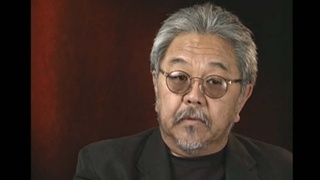
Receiving a negative reaction from father upon asking about World War II experience
(b. 1939) Japanese American painter, printmaker & professor
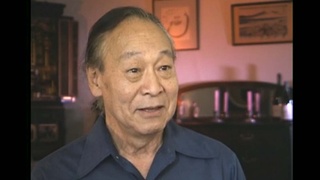
Loss of happy-go-lucky adolescence in Puyallup Assembly Center
(b. 1923) Nisei from Washington. Resisted draft during WWII.
Memories of dusty conditions at Minidoka incarceration camp
(b. 1923) Nisei from Washington. Resisted draft during WWII.
Thoughts on redress
(b. 1923) Nisei from Washington. Resisted draft during WWII.
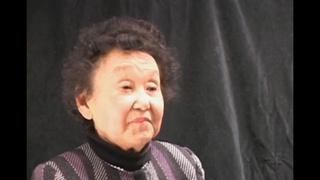
Family life in a Japanese Canadian internment camp in Slocan
(b. 1920) Incarcerated during World War II. Active member of the Japanese Canadian community
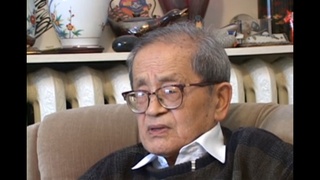
Redress Movement in Canada
(b.1924) Japanese Canadian Nisei. Interpreter for British Army in Japan after WWII. Active in Japanese Canadian community


