Discover Nikkei Logo

https://www.discovernikkei.org/en/interviews/clips/258/

Going back to Hawaii

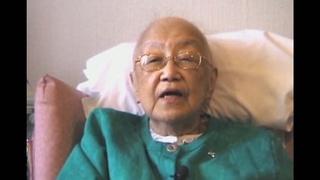
I was born in Kumamoto. Among the nine siblings, I was the only one. I mean, eight siblings, I was the only one to be born in Japan. And so, three months after I was born, my father felt that there's no place like Hawaii to bring up his children and to educate them. And I think the children missed, you know, the Hawaiian lifestyle. And because my dad went home with lot of gold and money, the relatives kept on borrowing money from him. And so he thought before he ran out of money, you know, he'd rather come back to Hawaii.

So my life started out quite unusual. We settled back on that old sugar company Camp One was called Japanese camp. And so it was right about the sugar mill, it was the hub of plantation life. All the action took place there and that's the reason why every morning, I watched the workers walk down the dirt road right in the back of our house or front of the house. And I kind of recognized the different types of clothing that they wore depending on their work.


families Hawai'i immigration migration United States

Date: Feb 19, 2004

Location: Hawai'i, US

Interviewer: Lisa Itagaki, Krissy Kim

Contributed by: Watase Media Arts Center, Japanese American National Museum.

Interviewee Bio

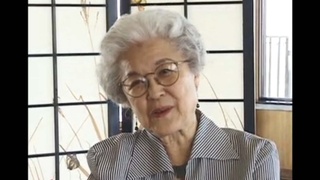
Barbara Kawakami was born in 1921 in Okkogamura, Kumamoto, Japan, in a feudal farmhouse that had been her family’s home for more than 350 years. She was raised on the Oahu Sugar Plantation in Oahu, Hawai’i, and worked as a dressmaker and homemaker before earning her high school diploma, Bachelor of Science in Textile & Clothing, and Master of Arts in Asian Studies—after the age of 50.

In her senior year, she began to research the clothing that immigrants wore on the plantation for a term paper. Finding there was relatively little academic research in this area, Barbara embarked on a project to document and collect original plantation clothing as well as the stories behind the ingenuity of the makers. Over the course of fifteen years, Barbara recorded more than 250 interviews with aging Issei women and men and their Nisei children. She captured their lives, the struggles of immigration, and conditions working and living on the plantation. Importantly, she documented the stories behind the ingenuity of these Issei women as they slowly adapted their traditions to suit the needs of plantation life. Her knowledge of the Japanese language, having grown up on the plantation, and her extensive background as a noted dressmaker, helped many Issei women feel comfortable about sharing the untold stories of their lives as picture brides. From her extensive research, she published the first book on the topic, Japanese Immigrant Clothing in Hawai‘i 1885-1941 (University of Hawai‘i Press, 1993).

A noted storyteller, author, and historian, Barbara continues to travel to Japan as well as throughout the United States to give lectures regarding plantation life and clothing. She is widely recognized as the foremost authority on Japanese immigrant clothing and has served as a consultant to Hawaii Public Television, Waipahu Cultural Garden Park, Bishop Museum, the Japanese American National Museum, and to the movie production of Picture Bride. (February 19, 2004)

Roger Shimomura
en
ja
es
pt
Roger Shimomura

Grandfather's arrival in the U.S., experiencing discrimination

(b. 1939) Japanese American painter, printmaker & professor

en
ja
es
pt
Marion Tsutakawa Kanemoto
en
ja
es
pt
Marion Tsutakawa Kanemoto

Mother's immigration to U.S. as a treaty merchant

(b. 1927) Japanese American Nisei. Family voluntarily returned to Japan during WWII.

en
ja
es
pt
Rose Kutsukake
en
ja
es
pt
Rose Kutsukake

Why her parents came to Canada

(1918-2004) Interned in Slocan during World War II. Active member of the Japanese Canadian community.
en
ja
es
pt
Fred Sasaki
en
ja
es
pt
Fred Sasaki

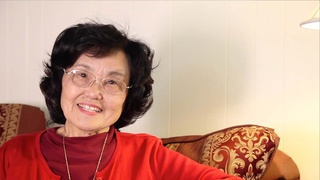
Family background of Fredrick Yoshihide Sasaki

(b. 1918) Issei businessman in Canada
en
ja
es
pt
Pat Adachi
en
ja
es
pt
Pat Adachi

Relationship with my father

(b. 1920) Incarcerated during World War II. Active member of the Japanese Canadian community

en
ja
es
pt
Kimi Wakabayashi
en
ja
es
pt
Kimi Wakabayashi

Arranged marriage

(b.1912) Japanese Canadian Issei. Immigrated with husband to Canada in 1931

en
ja
es
pt
Kimi Wakabayashi
en
ja
es
pt
Kimi Wakabayashi

Her early life in Canada

(b.1912) Japanese Canadian Issei. Immigrated with husband to Canada in 1931

en
ja
es
pt
Mitsuo Ito
en
ja
es
pt
Mitsuo Ito

Chose to go back to Japan

(b.1924) Japanese Canadian Nisei. Interpreter for British Army in Japan after WWII. Active in Japanese Canadian community

en
ja
es
pt
Shizuko Kadoguchi
en
ja
es
pt
Shizuko Kadoguchi

Marrying Bob against family’s wishes

(b.1920) Japanese Canadian Nisei. Established the Ikenobo Ikebana Society of Toronto

en
ja
es
pt
Shizuko Kadoguchi
en
ja
es
pt
Shizuko Kadoguchi

Choice to move east or go to Japan

(b.1920) Japanese Canadian Nisei. Established the Ikenobo Ikebana Society of Toronto
en
ja
es
pt
Seiichi Tanaka
en
ja
es
pt
Seiichi Tanaka

Coming to America

(b.1943) Shin-issei grand master of taiko; founded San Francisco Taiko Dojo in 1968.

en
ja
es
pt
Enson Inoue
en
ja
es
pt
Enson Inoue

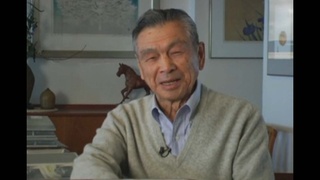
Growing up in a Japanese American family

(b. 1967) Hawai`i-born professional fighter in Japan
en
ja
es
pt
Enson Inoue
en
ja
es
pt
Enson Inoue

The reason for coming to Japan

(b. 1967) Hawai`i-born professional fighter in Japan

en
ja
es
pt
Enson Inoue
en
ja
es
pt
Enson Inoue

Tracing my family crest

(b. 1967) Hawai`i-born professional fighter in Japan

en
ja
es
pt
Toshio Inahara
en
ja
es
pt
Toshio Inahara

Family background

(b. 1921) Vascular surgeon

en
ja
es
pt

Discover Nikkei Updates

NIMA VOICES
Episode 19
Guest host Tamlyn Tomita chatted with actor Christopher Sean in the latest episode of Nima Voices about his background, acting, and community involvement.
WATCH NOW!
VIRTUAL PROGRAM
Nikkei Uncovered V: a poetry reading
Tuesday, December 9
Hosted by traci kato-kiriyama. Featuring Aaron Caycedo-Kimura, Erica Isomura, and Syd Westley
SUPPORT THE PROJECT
Discover Nikkei’s 20 for 20 campaign celebrates our first 20 years and jumpstarts our next 20. Learn more and donate!